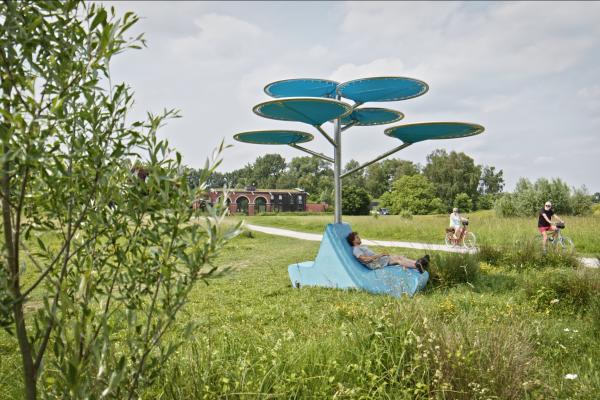
Learning, growing, leading: Stories of EUI cities’ transformation journeys

Join us on a brief tour across Europe to see and take inspiration from how Chalandri in Greece (population 77,000), Varaždin in Croatia (population 47,000) and Lille Metropole in France (population 1.2 million) have managed to combine activities under multiple strands to maximise the added value received.
Chalandri (EL) - how a small municipality gained a big voice
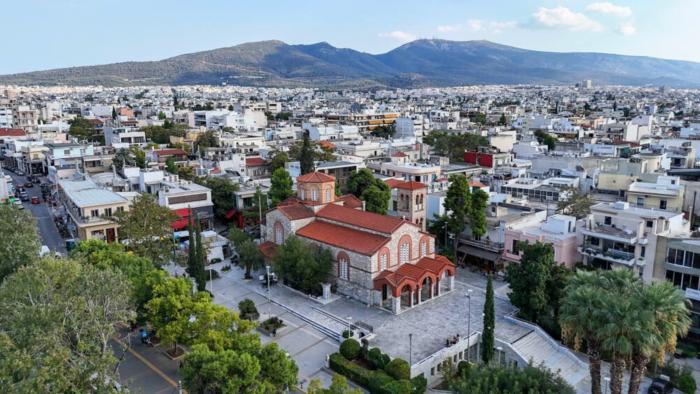
Chalandri
In 2020, the Municipality of Chalandri - a suburb of Athens - was successful with an ambitious application under the Urban Innovative Actions initiative (2014-2020). The CULTURAL H.ID.RA.N.T. project proved to be the start of an exciting journey, delivering not only impressive local impact, but also situating the municipality as a European leader on leveraging cultural heritage for sustainable urban development.
The project mobilised over 3.1 million EUR in ERDF funding to restore a largely forgotten Roman aqueduct running - often underground - through the city, whilst rehabilitating open spaces in the surrounding areas. This served to revalorise its cultural potential, as well as restore water-based services.
Physical restoration was supported by the creation of the Chalandri Hadrian Community - an innovative community-driven governance structure to manage the aqueduct and the distribution of its (non-drinking) water to around 100 households. It also organises educational and awareness-raising events to promote the cultural significance of the aqueduct and issues such as water scarcity.
Concluding in June 2023, the project quickly gained international interest. It was officially recognised at the 2023 European 'Innovation in Politics Awards' and the at the sixth 'Guangzhou International Award for Urban Innovation.'
Building on these successes, Chalandri was selected to host the ‘Focused Policy Lab on Culture and Cultural Heritage’, jointly organised by EUI and URBACT in September 2024. This event placed Chalandri squarely at the heart of European-level exchanges on the transformative power of culture and heritage for promoting social cohesion and environmental improvements in urban areas.
Chalandri’s journey is now continuing as Lead Partner of the URBACT Innovation Transfer Network Hydro-Heritage Cities (2024-2026). This two-year project involves five European cities seeking to learn how to similarly reimagine their ancient water systems as living assets for sustainability, culture and community resilience.
Exchanges have already showcased Chalandri’s approach to blending infrastructure investments with community ownership and imagination. It also gives the Chalandri the opportunity to develop its own plans to expand the methodology and practices showcased so successfully in the original innovation.
Despite being a small municipality in European terms, Chalandri is now a leading voice on the topic of water-sensitive design within sustainable urban policies. This was evidenced when the municipality was confirmed as one of the eight city partners of the Water Sensitive City Partnership of the Urban Agenda for the EU, launched in November 2024.
Through the partnership, this municipality of only 77,000 inhabitants will now be at the heart of multi-level policy discussions on how to support cities to embed water-sensitive approaches in daily planning, investment decisions and operations across the EU.
Varaždin (HR) - building local confidence in European activities
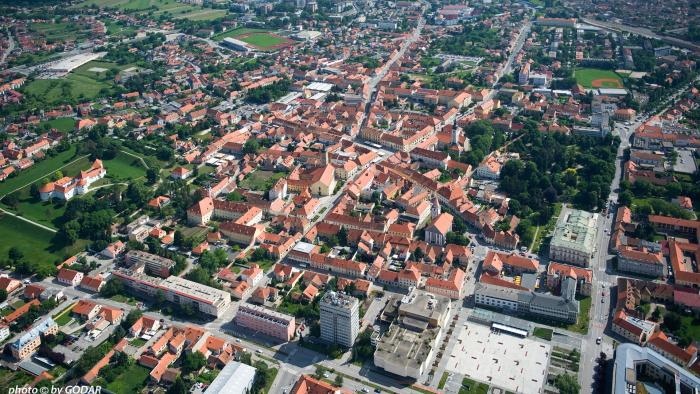
Varazdin
The small Croatian city of Varaždin - with only around 47,000 inhabitants - started modestly, with an EUI-supported City-to-City Exchange with Plasencia, Spain. Taking place over just a few months in early 2024, the exchange was specifically focused on learning from the small Spanish city’s experience of developing its own tourism app.
Through one study visit in each direction, team members from Varaždin learned practical insights for the development of an app aimed at connecting locals and tourists with the city’s cultural and gastronomic offer. This included practical lessons about glitches that can occur and how to avoid them.
They also received broader messages which directly informed a new overall ‘Sustainable Tourism Development Plan’. As an Article 11 City - formally designated by Croatia to lead integrated sustainable urban development measures as defined in Article 11 of the ERDF Regulation - the experience encouraged Varaždin to bolster its overall approach to sustainable urban development.
To this end, the city successfully applied to take part in the EUI-supported Peer Review in Athienou, 30-31 October 2024. At the fifth such event organised by EUI, Varaždin presented its 2021-2027 “Strategy for the Development of the Varaždin Urban Area”, receiving detailed feedback from five peer cities on questions such as how to connect cross-sectoral projects for increased strategic impact.
Alongside these strategic considerations, Varaždin successfully applied for its first Innovative Action under the EUI. The InterACT Green project, which started in March 2024, seeks to develop new digital services alongside physical interventions to enrich the region with an organised green urban public space - the River Drava Forest Park.
The project, which will run until August 2027 is mobilising just over 4 million EUR in ERDF support to develop an interactive, multidimensional digital platform - both to assist public authorities in managing the park and to encourage and enable tourists and residents to visit and utilise these areas. It also includes physical regeneration of the park and improved forest management.
Varaždin’s increased confidence in European programmes, networking and exchange has also translated into increased participation in other exchange and learning activities organised by EUI. The city participated in the Policy Lab on Culture and Cultural Heritage hosted by Chalandri. Even more recently, a representative from the city participated as a speaker in the EU City Lab on active mobility.
Lille Metropole (FR) - taking advantage of strategic opportunities
Lille
Lille is one of the largest metropolitan areas in France with a significant experience in developing innovative projects and integrated approaches. It regularly accesses Cohesion Policy support to enhance these efforts in carefully targeted ways.
Already from 2016 to 2020, Lille Metropole was a key partner in an Urban Innovative Action led by the City of Lille on local social cohesion and food. The TAST'in FIVES project piloted a community kitchen on a former brownfield site in a disadvantaged area. It fostered community interaction, skills development, job opportunities and education and awareness raising, all through the medium of food and cooking.
When the Urban Agenda for the EU launched its new Partnership on Food in January 2024, Lille Metropole was one of the 26 multi-level actors taking part. It has thus played a key role in shaping the Partnership’s Action Plan - published in September 2025 - which advocates for an empowering EU framework for more sustainable local food policies.
Lille Metropole has also taken advantage of smaller-scale EUI-supported opportunities to address specific challenges. In late 2023, it successfully applied for a City-to-City Exchange with Turin, Italy. This short-term project - one study visit in each direction - focused on Turin’s experience of urban regeneration projects in former industrial sites and on riverbanks.
“Our overall experience of the exchange was very positive: we got fresh ideas for our own park development, and examples from other developments to show our elected representatives,” they enthused after the visits. They have used the insights to further evolve regeneration plans for the former industrial areas around the River Deule.
Finally, since March 2024, Lille Metropole has a new EUI-supported Innovative Action, focused on local adaptations to the impact of climate change in cities. Called Time2Adapt, the project aims to rethink the way we use different spaces and locations over time, in order to foster improved solutions to challenges such as urban heat island effects.
Innovative time-based and low-tech solutions currently being explored - with nearly 5 million EUR in ERDF support - include extending the opening hours of public buildings, exploring how e.g. school facilities can be used during evenings and weekends, as well as setting up temporary structures (artistic or functional) to promote access to cool, comfortable spaces.
Maximising future opportunities for cities
These examples demonstrate how cross-strand support from the EUI - as well as complementary networking and exchange opportunities provided by URBACT - can be used to maximise both impact and visibility for towns and cities in Europe.
Whether building up from a short-term capacity building project (e.g. Chalandri), looking to exploit the success of an innovative action (e.g. Varaždin) or simply mobilising different strands to meet different local needs (e.g. Lille Metropole), cities have shown how to tailor their approach to take full advantage of the opportunities available.
The good news is that more such opportunities will be available to cities in 2026. There will be a new EUI call for Innovation Actions - with a special focus on smaller cities with less experience of such innovation support. The Call for Applications for City-to-City Exchanges is continuously open. Look out also for future calls for EUI-supported Peer Reviews and URBACT networks.
How will your city take strategic advantage of the opportunities on offer in 2026?