Community gardening, AI visualisations and biodegradable art – Participation in Turku neighbourhoods
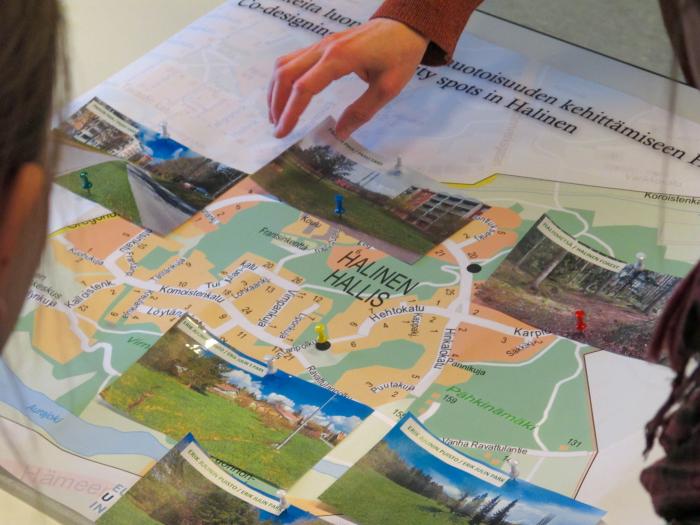
Over the past 1.5 years, residents have been able to plant seedlings, sow seeds, and suggest changes to their environment. Ideas have been visualised using AI, and all actions are documented so that lessons can be shared with other cities. Biodiversity is also strengthened in built environments: in parks and roadside strips. This can include sowing meadow plants, adding deadwood, and planting trees.
-
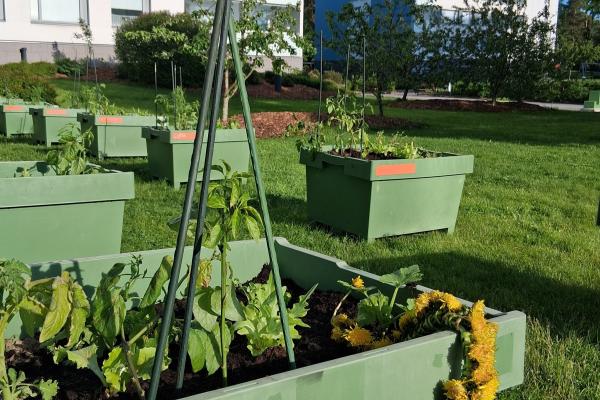
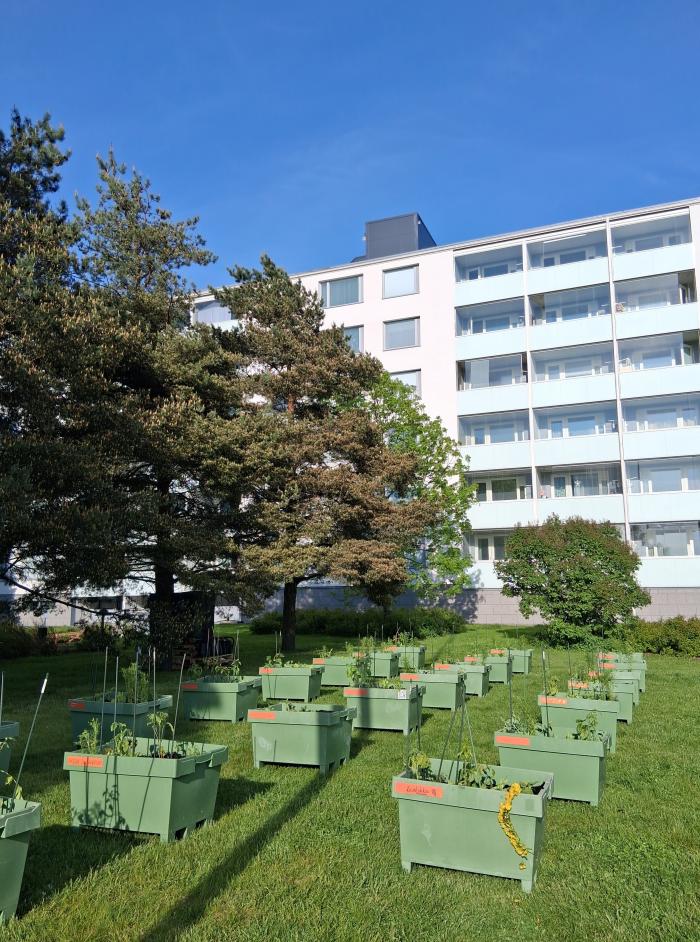
In Jyrkkälä, a community gardening project was organised during the summer of 2025. It started in early June with a successful opening ceremony featuring circus artists, ice cream, and dozens of enthusiastic participants. Half of the 30 planting boxes were pre-booked, and by the end of the opening event, all boxes had been reserved. In early September, after the summer season, a harvesting event was held where the final crops were gathered, and participants were invited to share their experiences of the community gardening.
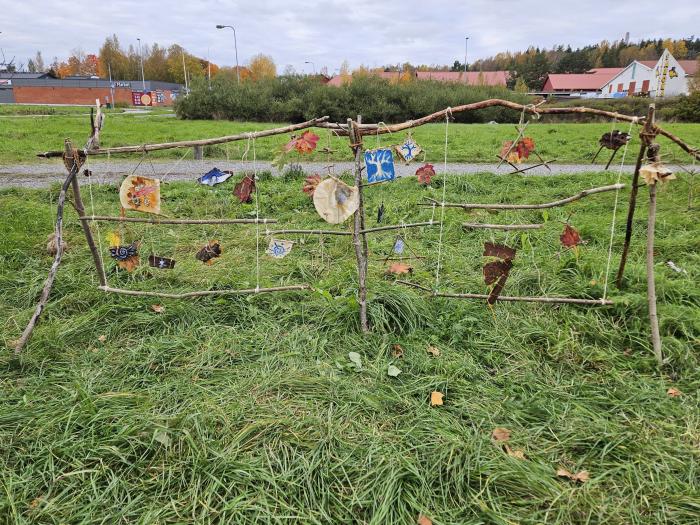
In October, under the guidance of artist Hanne Lammi, biodegradable materials were used to create art: stunning works appeared among Jyrkkälä’s buildings, in the forest near Aunela School, and by Kardinaalinkatu in Halinen. Schoolchildren and residents created the works using branches, cones, and beautifully colored autumn leaves.
-
Why Halinen and Jyrkkälä?
In 2023, Turku collected residents’ views on where biodiversity should be strengthened. Based on the results and expert discussions, Halinen and Jyrkkälä were chosen as pilot areas.
- Jyrkkälä is a block of flats with about 1,300 residents, known for its community spirit and willingness to develop.
- Halinen is a multicultural district with about 4,000 residents, combining village-like atmosphere with proximity to the city.
What’s next?
In 2026, the nature values of two green areas in Halinen and Jyrkkälä will be improved. In Erik Julin Park in Halinen, biodiversity will be increased in several ways. The Jyrkkälä roadside strip will become a place for many species instead of just shrubs. Residents have been involved in the planning process, and their opinions have served as valuable input for designing these areas.
-