Residents Shape Communal Gardens in Oud-Mathenesse
A Community-Driven Approach to Climate Adaptation
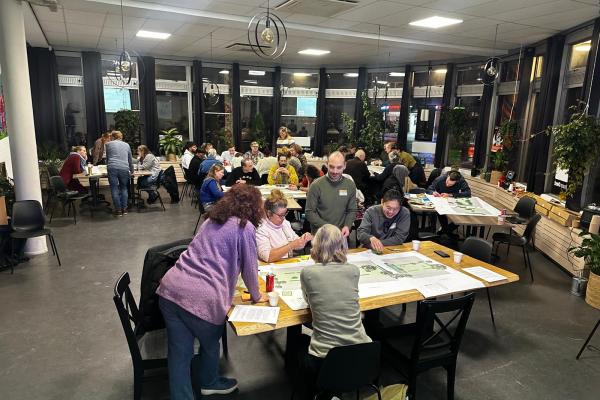
On November 27, 2025, the city of Rotterdam and the EUI funded Greening Without Borders project hosted a Communal Garden Design Evening in the Oud-Mathenesse neighbourhood. The event marked the official start of the first private land greening (sub)project. Two more Private land greening projects will follow the coming year(s), one for individual private gardens and one for shared owned neglected alleyways.
The communal gardens have 3 main requirements, amongst others:
- Water retention to reduce flooding risks
- Biodiversity enhancement for healthier ecosystems
- Shared green spaces to strengthen community ties
Some of the other requirements are that the semi-public character of the gardens needs to be preserved; the gardens need to be in the area where the city's sewage approach takes place; the design needs to stay within the available budget.
Residents Take the Lead
More than 25 residents attended the evening, representing all six eligible communal gardens in the neighbourhood. Each garden involves multiple homeowner associations, requiring collaboration on design, implementation, and maintenance.
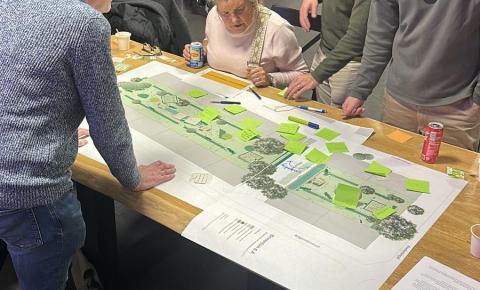
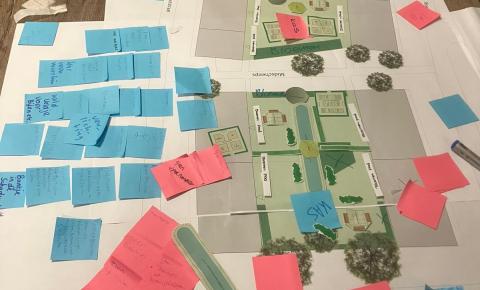
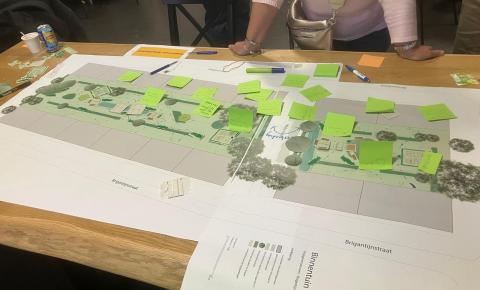
The evening began with a presentation by the Programme Manager, district manager, and district networker, outlining the project timeline and selection criteria. Afterwards, residents worked in groups, representing each communal garden, to design their ideal garden. They were provided with a map of their garden, on which they could put garden elements, such as trees, shrubs, flower beds, water retention, and social elements such as benches, tables and BBQ spots.
Designs That Build Community
The event was not only about creating greener spaces—it was about connecting neighbours. Some residents met for the first time, sharing ideas and building consensus on what their communal gardens should look like. By the end of the evening, six unique garden designs were completed, each reflecting local needs and preferences.
Next Steps
The city’s landscape architect will now consolidate these designs into a coherent plan, considering technical and budgetary constraints.
-
January 2026: First draft designs shared with residents
-
February 2026 Final designs to be voted on by Homeowner associations
-
June 2026: Deadline for Homeowner associations approval
-
July 2026-December 2026: City prepares for implementation of designs
-
Early 2027: Implementation begins, with gardens ready for use by spring/summer 2027
Key Takeaways
-
Strong Community Engagement: Over 25 residents actively participated.
-
Climate Adaptation in Action: Focus on biodiversity, water retention, and shared spaces.
-
Collaborative Design Process: Residents designed six unique garden plans.
In Short
The Communal Garden Design Evening was a resounding success, combining climate adaptation goals with community building. This is only the start of the first private land greening project, that will demonstrate that residents can be empowered to create greener, more resilient neighbourhoods.
Communal Garden Design Evening in Oud Mathenesse