Research into Heat Stress and Extreme Rainfall
What is the reason for this research?
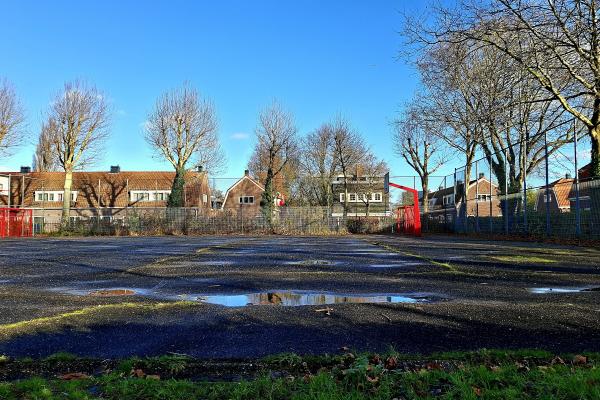
“Actually, there are two reasons. First, the soil in Tuindorp Oostzaan mainly consists of clay and peat. Second, the ground often becomes too dry in summer and too wet during other seasons because it rains more frequently and for longer periods. Because the groundwater level is already high due to the soil composition, rainwater cannot drain away properly. This can be seen, for example, in the puddles that remain on the streets. Of course, we see this throughout the city, but because there is hardly any difference in height between the streets, gardens, and houses in Tuindorp Oostzaan, nuisance and damage occur more quickly.”
What exactly was investigated?
“We looked at what happens when between 70 mm and 90 mm of rain falls per hour. These are showers that currently occur very rarely, but they are possible. It is important to be prepared for this, as we know that such downpours can cause significant damage to homes in Tuindorp Oostzaan because the rainwater cannot drain away properly. That is why it is wise to already consider how we can prevent damage in these situations and keep roads accessible. In addition, we investigated heat stress in the neighbourhood on extremely hot days. For example, we mapped shaded walking routes and identified locations suitable for people to retreat to on a hot day. Because Tuindorp has a lot of paving that retains a great deal of heat, there are not many such places. Fortunately, the courtyards do provide some shade and cooling for residents.”
What will happen with the results of the research?
“Now that we have a clear picture of the neighbourhood in terms of climate and water, we can start working on solutions. For example, our insights have been used as input for the design of Plejadenplein, which is intended to become ‘climate-adaptive’ in the future. This means that the square will be better able to withstand extreme weather. We will achieve this, among other things, by planting more greenery and creating more places where rainwater can be properly drained or stored. In this way, the square will remain pleasant during heat, drought, and after heavy rainfall.”