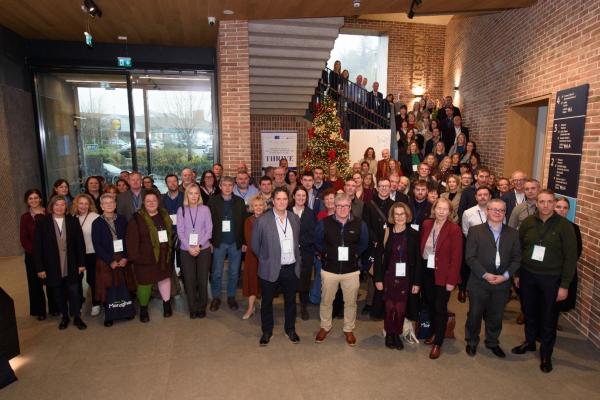
Ireland’s second National Capacity Building Event, Reimagining Places: Sustainable Conservation of Ireland’s Beautiful Heritage – An EUI Capacity-Building Event under THRIVE and beyond

Organised by the Eastern and Midland Regional Assembly (European Urban Initiative (EUI) Urban Contact Point entity for Ireland) alongside the EUI Permanent Secretariat, and in close association with other partners including the European Commission, the Northern and Western Regional Assembly, the Southern Regional Assembly, and Monaghan County Council, events like these realise a vital and impactful element of the EUI’s capacity building offering, which seeks to enhance and strengthen cities' abilities to develop Sustainable Urban Development policies, strategies and practices. The event is the second National Capacity Building Event enjoyed by our Irish local authorities, following on from the success of last year’s one in Limerick.
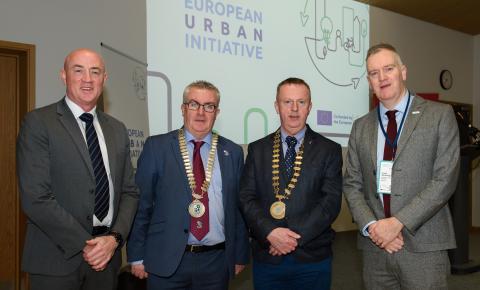
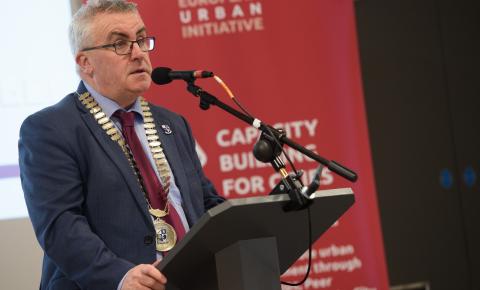
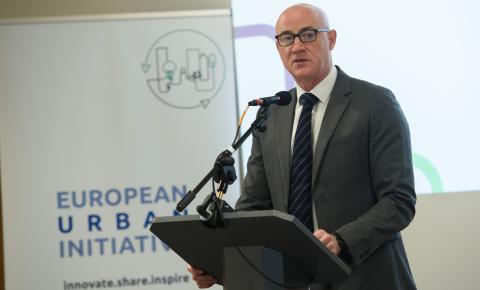
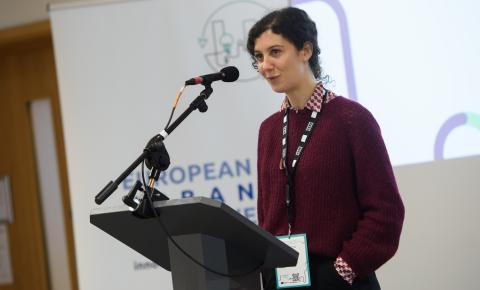
The event began with contributions by Cllr PJ O'Hanlon, Cathaoirleach (Chairperson) of Monaghan County; Council Robert Burns, Chief Executive of Monaghan County Council; Cllr. Michéal Frain, Cathaoirleach of the Northern & Western Regional Assembly and Eleonora Giorgi from the European Urban Initiative, before Conall McGettigan, Director of the Northern & Western Regional Assembly, presented an update on the THRIVE scheme and the 19 capital projects that are now under way across Ireland. The Town Centre First Heritage Revival Scheme is an ERDF co-funded grant programme targeting local authorities to empower communities to reimagine town centres by revitalising publicly owned vacant or derelict heritage buildings through renovation, renewal, and adaptive reuse.
Opening speakers

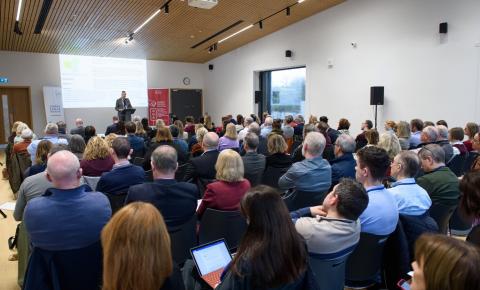
Throughout the event, participants had the opportunity to learn more about these projects, including during the panel on day one focusing on lessons learned from THRIVE implementation, but also during the reception prior to dinner, with a poster showcase of the 19 projects from across the regions.
Participants next had the privilege to hear from Giulia Vallone, Senior Architect, Cork County Council who gave an inspiring and energetic keynote address on ‘Beauty, Sustainability, Belonging: A New European Bauhaus Vision’, sharing examples from exciting projects under way in several towns in Cork, including Clonakilty, Cobh and Kinsale.
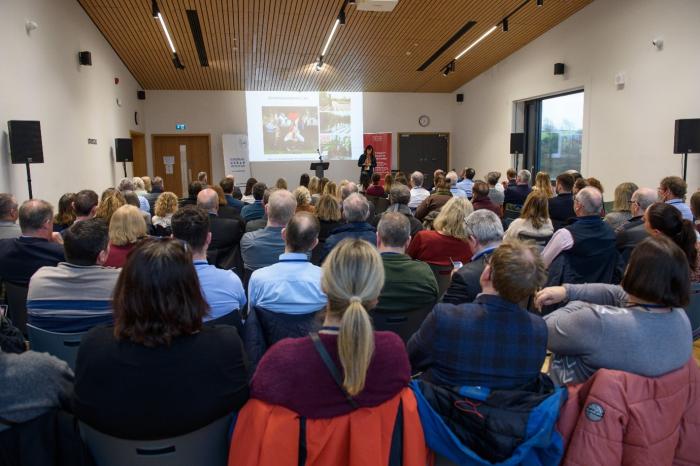
Keynote speaker Giulia Vallone
The day continued with the first panel of the event entitled - ‘From Barriers to Bridges: Adaptive Reuse for a Shared Future - Lessons from THRIVE Implementation’ which gathered the European Commission, Ireland’s National Contact Point for the New European Bauhaus and three THRIVE projects’ representatives who shared their insights and perspective and presented the challenges and the opportunities offered by their conservation projects. This panel discussion was set to demonstrate to other THRIVE project participants, including the newest announced 14 projects, as well as other similar future projects of this nature, obstacles that might be encountered by projects and how to best overcome these during the detailed design phase.
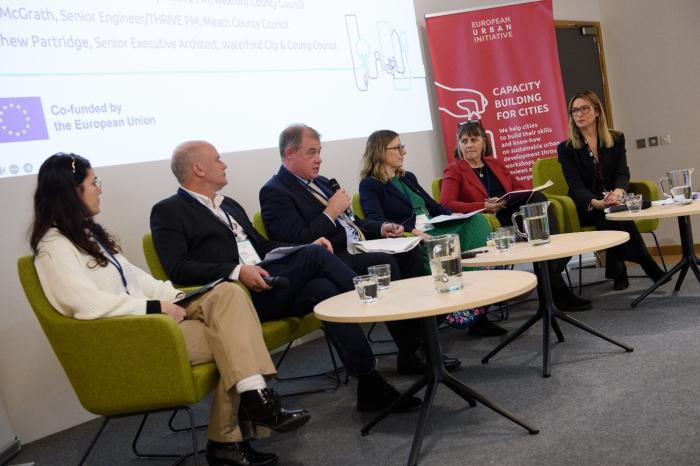
Panel discussing THRIVE projects
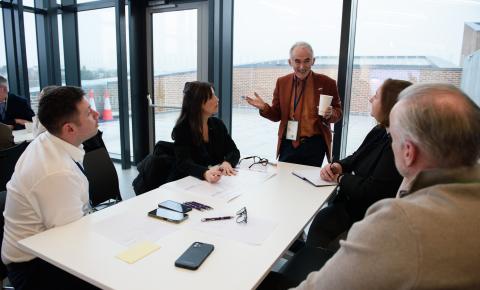
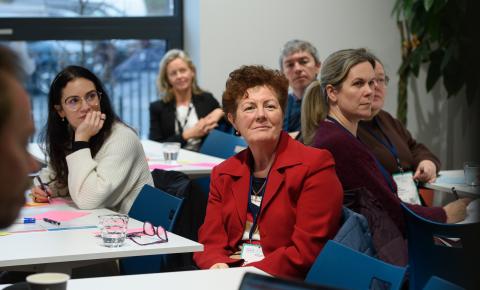
The afternoon was dedicated to five parallel workshops where ten Irish and other European case studies were paired to share with the workshop participants the challenges and opportunities which they faced in the implementation of their projects with a focus on operational solutions for creative regeneration during project design and delivery. These case studies involved the following pairings: Waterford Treasures & Free Riga's ‘Viskaļi Institute of Design for Quality of Life’ (Latvia); Portumna Courthouse, Galway & Cultuurcampus, Rotterdam (the Netherlands); McKee Barracks, Dublin & Centre Rog: Ljubljana's Creative Hub (Slovenia); Shackleton Museum, Kildare & Löfstad Castle (Sweden); and the Model Sligo & Youth Culture House, Aarhus (Denmark). Participants collaborated in small groups within each workshop, first hearing directly from the case study presenters on their challenges, before then discussing their own knowledge of good practice, brainstorming possible solutions, deliberating on transferability, before considering barriers and enablers. Each group then fed their discourse back to the wider workshop prior to the presenters revealing the solutions they had developed, allowing the groups to leave the session considering these approaches to their own local challenges.
Workshops
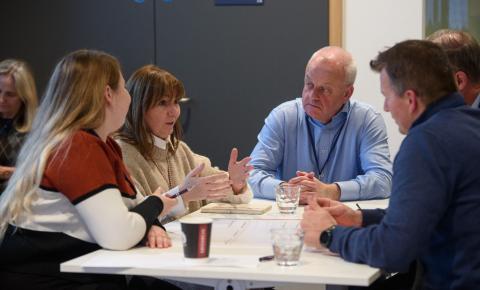
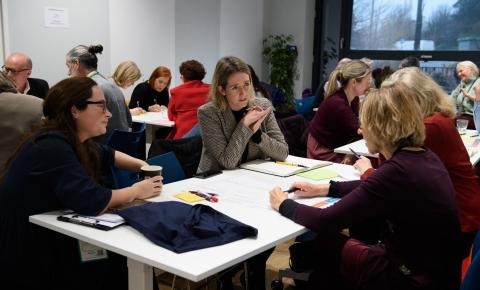
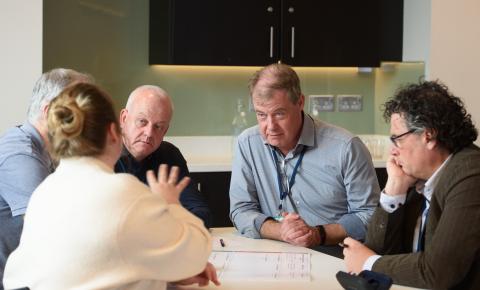

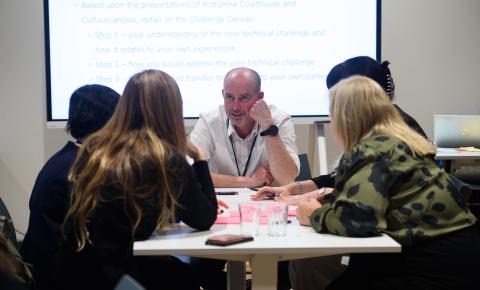
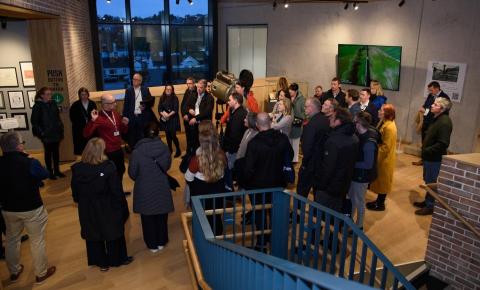
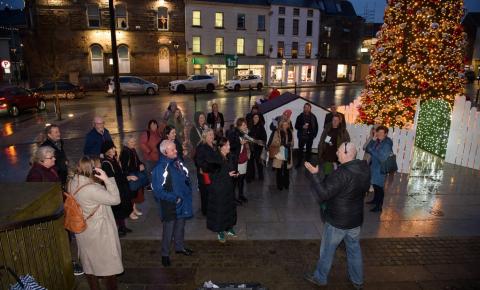
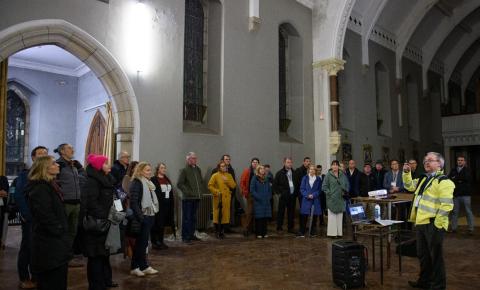
Next it was time for the participants to discover Monaghan Town and embark on a site-visit which took the group on a tour of the Peace Campus by the museum curator, the Monaghan Courthouse (also including the Dawson Monument, Bank of Ireland, St Patrick Church and Rossmore Monument Market house), and the Former St. Louis Convent Chapel (this last site set to undergo a major transformation due to its successful funding application under the THRIVE scheme). At each site, participants were asked to engage in an “Observe & Suggest” exercise in relation to each site, maximising the capacity building experience for the participants.
Site visits


A successful day one concluded with a dinner that was preceded by the launch of the THRIVE exhibition where the 19 projects receiving funding under Strand 2 (call 1 & 2) of the scheme, dedicated to capital works for the renovation and adaptive reuse of vacant or derelict heritage buildings, showcased their project work to date. The exhibition also allowed participants to network over a cocktail while the projects’ representatives had their photos taken with staff from the European Commission.
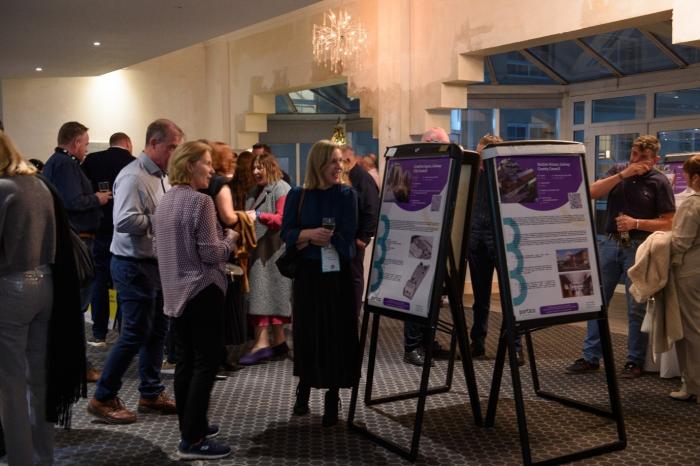
THRIVE exhibition
The second day kicked off with a recap and reflection on day one, followed by a new panel discussion focusing this time on ‘Adaptive Reuse for a Beautiful, Sustainable, and Together Europe’, gathering practitioners, primarily from across other European countries to share their experience.
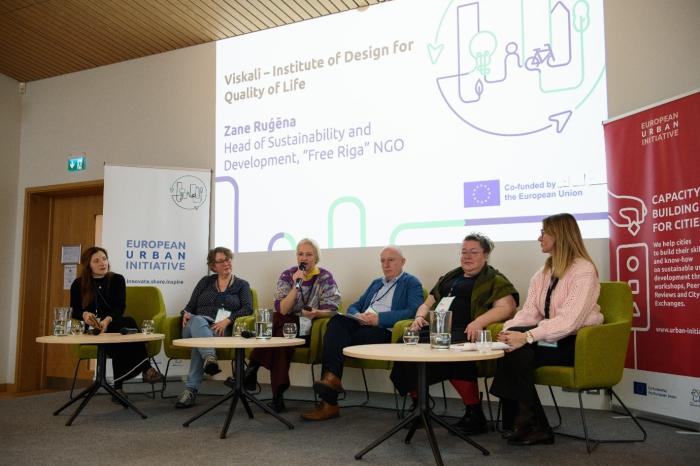
Panel discussing European example of adaptive reuse
This session was followed by a second round of workshops which this time focused on governance and partnership solutions for creative regeneration, moving the focus of participants from the operational to the technical. A similar approach to day one was otherwise taken, with participants hearing from the case study presenters, reflecting on good practices, challenges, transferability and barriers and enablers, before reporting back and discovering the case studies’ uniquely developed solution.
After a final session dedicated to reflection and take away learnings from the event, especially the plenary and workshops sessions, this capacity-building event was closed by Clare Bannon, Acting Director of the Eastern and Midland Regional Assembly (EMRA), preceding a closing lunch where participants stayed on in high numbers to network, discuss synergies and plan future exchanges between one another.
Reflections and closing
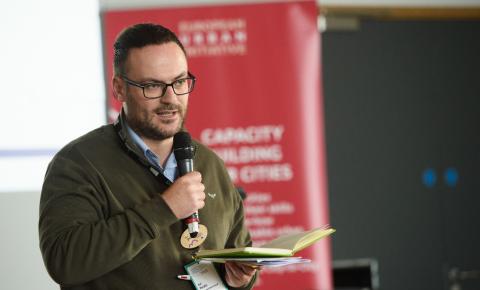
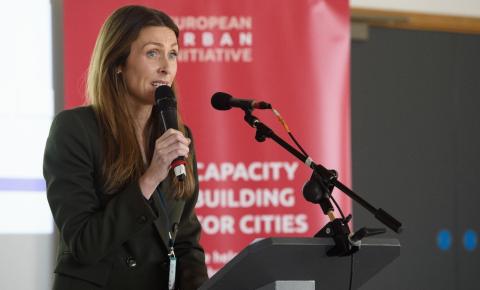


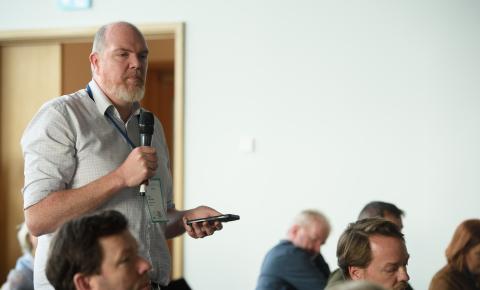
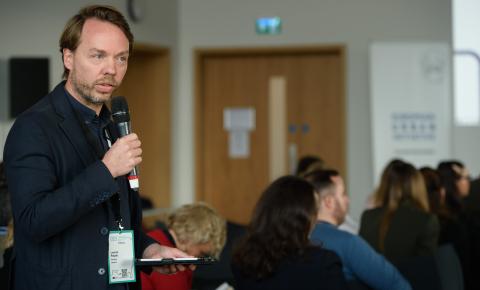
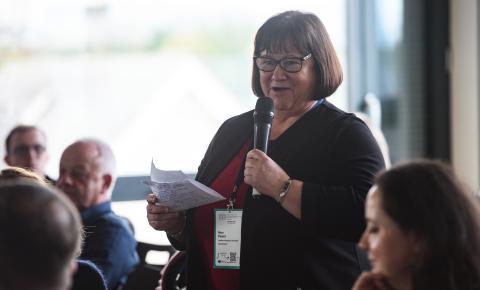
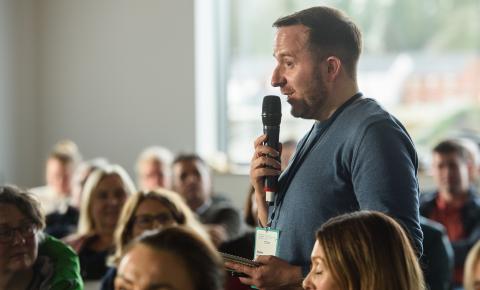
This event, which was excellently co-designed and moderated by Eileen Crowley and Eleni Feleki, with their team of fellow experts, highlighted the many shapes and forms that adaptive reuse and creative regeneration can take and equipped participants with examples and key lessons drawn from concrete projects that they will hopefully be able to reuse in their own practice, be they current THRIVE projects or similar future projects.
Event team
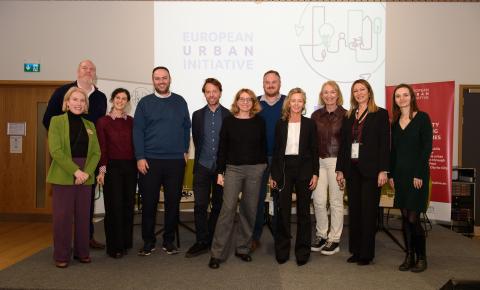

We are very grateful to those that made this event such a success, not least the large number of local authority staff that attended and meaningfully contributed across the two days. We look forward to delivering more opportunities like this into the future. Readers can access all resources, slides, and photographs from the Monaghan event by visiting the event page.
If you would like to learn more about the Monaghan event, or based in Ireland and wish to learn more about any other EUI capacity building opportunities, don’t hesitate to contact the EUI’s Urban Contact Point for Ireland, Karl Murphy at kmurphy@emra.ie