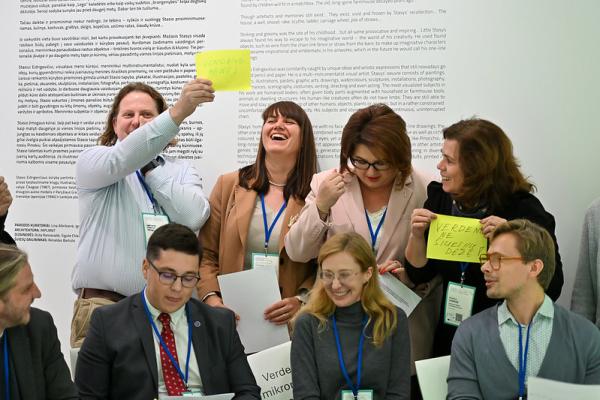
The European Urban Initiative, a driving force of the EU Agenda for Cities

With the EU Agenda for Cities, the EUI has been confirmed as a central instrument of Cohesion policy for supporting cities in strengthening their capacities, fostering innovation and improving access to knowledge and EU support. As cities remain the driving force behind sustainable urban development, the EUI serves as a key enabler by providing cities with the necessary tools, knowledge and resources to address their challenges effectively.
A continuous dialogue with cities, supported by the Urban Agenda for the EU and EUI
The EU Agenda for Cities puts cities at the heart of EU policymaking. From 2026 onwards, the European Commission will hold regular political dialogues with local leaders.
Building on the Urban Agenda for the EU and the work of the Partnerships, this dialogue will play a central role in providing key policy recommendations. The Cities Forum, co-organised by the EUI and the EC, continues to serve as the main space for policy exchange and community building. The next call for host cities will be launched in early 2026, ahead of the 2027 edition.
The EUI will also support the technical-level consultations with urban practitioners, highlighted in the EU Agenda for Cities, by providing spaces for knowledge sharing and capacity building, and facilitating real-time feedback.
In 2026, the Commission will publish a State of European Cities report, strengthening the evidence base for EU policy and supporting more informed decision-making at all levels. Together with the EUI Forward-Looking report, to be launched in the first half of next year, the aim is to identify cities' priorities and ensure that EUI support is adapted to their needs.
The EUI’s reinforced role: from innovation to guidance
As part of this new architecture, the European Urban Initiative plays a central role in helping cities navigate EU support. The EC has announced the creation of a Cities Helpdesk, which will assist cities in identifying the most relevant EU tools, funding options, and support mechanisms; and respond directly to cities’ operational challenges when dealing with EU programmes. This helpdesk will be facilitated by Portico, the EU's central knowledge and community hub for urban practitioners across Europe (more information at the end of the article).
Another key component of the new framework is the EUI Call 4 for Innovative Actions, set to open in early 2026, with a specific focus on supporting small and medium-sized cities in testing small-scaled innovative solutions. Following a bottom-up approach, it will allow urban authorities to submit proposals aligned with the urban priorities set in the EU Agenda for Cities.
With an indicative budget of EUR 60 million ERDF, the call is expected to support approximately 30 projects across Europe and reflects the collaborative efforts of the EC and EUI to create a space where cities can experiment new ideas and scale solutions to address Europe’s pressing urban challenges.
Preparing for the future: The EU Cities platform
The upcoming programming period will include the EU Cities platform, a unified structure that integrates funding, technical assistance, advisory services, data, and knowledge to support cities of all sizes, with a focus on adapting to the evolving needs of cities, particularly small and medium-sized ones, while addressing emerging challenges.
EUI has supporter over 850 cities to date, with strong participation from small and medium-sized cities (72%), in less than three years, offering key services that will form the foundation of the new platform.
Moving forward, EUI will continue to enhance these opportunities, ensuring cities have the resources and support they need. The Initiative is already contributing to this essential support across the five key components of the future platform.
a) Capacity and knowledge building, strategic planning, and networking
Through more than 30 EU and national events, EUI and Urban Contact Points has helped cities to strengthen their operational and administrative capacities for the strategic planning and operational implementation of sustainable urban development policies. In just 2 years, the EUI Peer Learning mechanisms, comprising 23 capacity-building events, 12 Peer-Review activities and 92 City-to-City Exchanges, have proven invaluable in helping cities tackle specific urban challenges by sharing practical knowledge and expertise.
b) Support for innovative projects
EUI and its predecessor UIA are the biggest providers of EU support for innovation in cities. This programming period sees three calls for innovative and bold urban projects, with a fourth call due to open in early 2026. This will feature a new model for small-scale innovations, piloting and testing a new approach that could be beneficial under the next programming period.
c) Advisory support for funding and finance
Providing cities with assistance on how to access and combine different sources of funding, as well as offering expertise and technical support, is a key enabler for the implementation of sustainable urban development in Europe, as demonstrated at the last EUI event (Access to funding: Practical tools for urban change). The Portico helpdesk, which is set to be implemented by the EUI, will play a key role in providing such advisory support.
d) Data and tools repository
Portico plays a central role in EC and EUI’s knowledge-sharing efforts, consolidating a wide range of resources and data from various EU initiatives, including a panorama of EU organisation and initiatives supporting the implementation of sustainable urban development. The platform serves as a one-stop-shop for cities, offering easy access to knowledge, tools, and resources necessary to implement sustainable urban development practices.
e) Support for a continuous dialogue
EUI’s role in facilitating continuous dialogue between cities and the EU remains fundamental. Through its participation in the governance of urban networks and cooperation with national and regional intermediary organisations, as well as through the organisation of the Cities Forum, EUI ensures that cities’ voices are central to the EU decision-making process. By leveraging its platforms, knowledge activities, and networks, EUI remains committed to supporting cities as they navigate the evolving urban landscape.

The EU Agenda for Cities marks a significant step forward in recognising the importance of cities in shaping EU policies. Through its ongoing dialogue, innovative support, and capacity-building efforts, EUI will continue to provide cities with the necessary tools to address the challenges of sustainable urban development and contribute to a greener, more connected, and inclusive Europe.
Further information
Portico helpdesk: The team that will implement the helpdesk and support the platform’s expansion will be selected under the currently published Portico tender.